She Turned Back the Tide
My mother’s path through pain, love, and healing

When Everything Broke
I was 14 years old the night my family finally broke.
I walked out of a warm summer night of playing as a child. I was breathing hard, sweating. I was smiling too, until I saw Judy—my mother—at the kitchen table, head in her hands.
She looked up as I walked in, tears streaming from her bright blue eyes.
Her face was contorted with naked emotion, her shoulders wracked by sobs.
“What’s wrong, Mom?” I leaned back as I said it. Part of me wanted to return to the world I had just exited, not knowing how I would deal with this new world where my mom wept so openly.
“Your father cheated on me,” she said.
I sat with her and listened while she told me how hurt she was.
My parents tried to work on their marriage. Judy was so angry, but she was so dedicated to her family. Sun Ray didn’t want to lose his marriage but couldn’t let go of his addictions. They tried hard to negotiate their differences, but in the end, they were just too far apart.
Finding Virtue in Divorce and Midlife Crisis
Judy did something remarkable when her marriage fell apart. In that critical moment, my mom did not stuff her feelings down, she did not make do, and she did not pretend she was fine.
For the first time, we as her children saw the full force of her anger. But it was not misdirected. She was clear and powerful in her response. She was going to feel it, and she, at least, was going to heal.
I remember hearing the sound of a baseball bat slamming into a punching bag while she screamed out her rage in the basement.
My brother, sister, and I sat in the living room, rolling our eyes at the silliness of this rather loud and weird method of healing.
But there was a part of us that was also happy for her. We all thought she had been a pushover for far too long.
Even if she was more angry and demanding with us at times during those years, we were also happy to see her growing a spine.
Where so many fall into depression and addiction in the worst moments of their lives, we got to watch our mother grow into herself.
For years, she had cared deeply about psychology and family healing, and in the wake of her divorce, she went back to school to become a clinical psychologist.
She had wanted a happy, healthy marriage, and she dedicated herself to doing everything she could to find a good man—and she succeeded in marrying a wonderful husband.
She did all this while sacrificing our needs as little as possible. She negotiated a settlement with Ray where she took over the part of our property on which our childhood home sat, while he built a house just 50 yards away. They lived peacefully and cooperatively, by and large, as they moved on with separate lives. All in all, we probably had one of the most peaceful transitions children of divorce can experience.
As I look back on that time now, having just recovered from my own marital crisis,
I see something brilliant in my mother. Faced with the worst pain of her life, she chose to feel it, to work through it, to continue to care for her children, and even to stay connected with her ex-husband. To do all that, and pour herself into self-growth. In that critical moment, as in so many, she taught us that there was a way to do better.
Her example—that there is a way through the hardest things—set the stage for me to do the work necessary to save my own marriage and family. And for that, I will be forever grateful.
The Pain She Left Unfelt
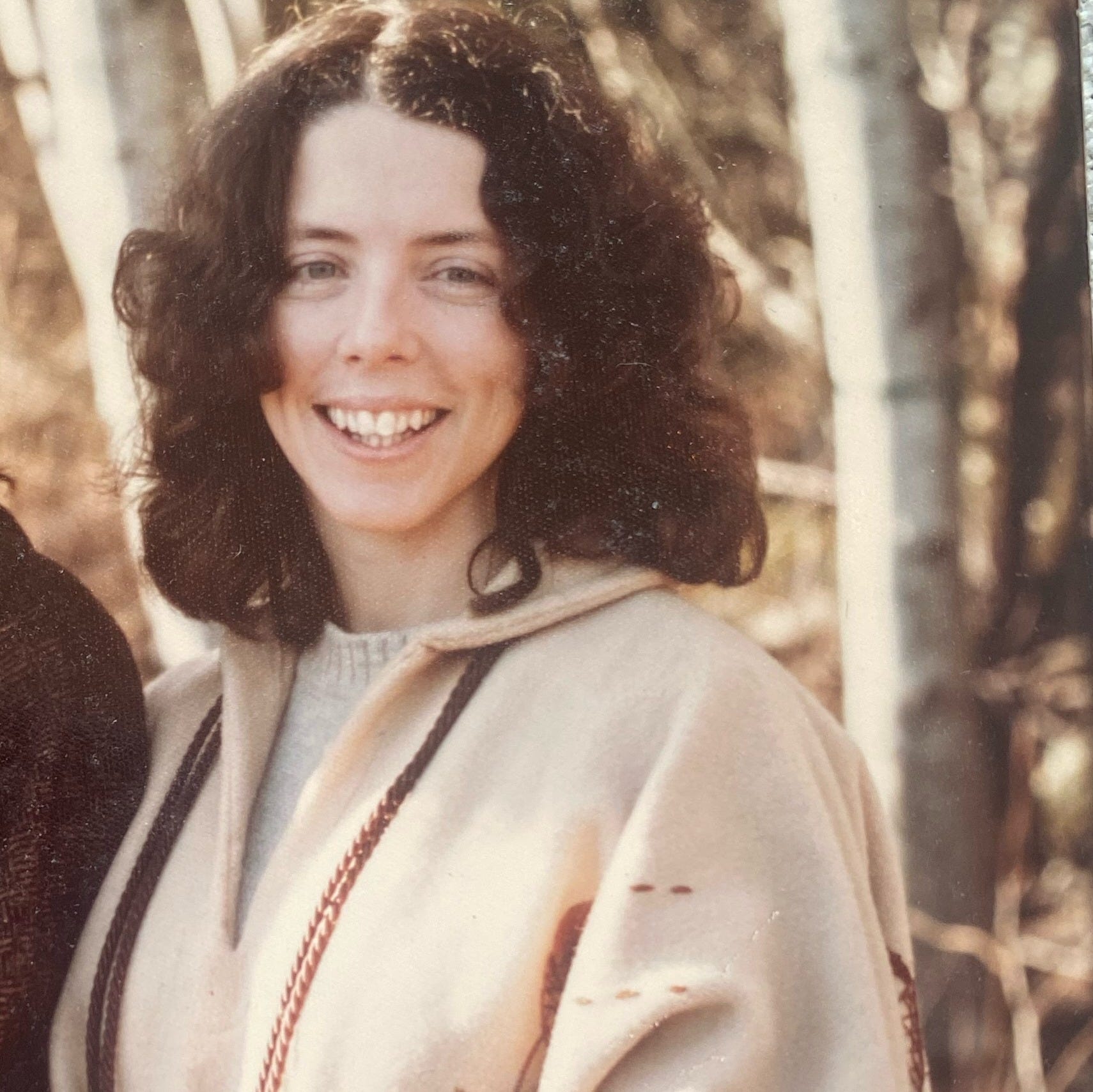
My mother was the valedictorian of her high school. She was beautiful, with bright blue eyes, thick curly hair, a slim and curvy figure, and an incredibly warm smile. She did not lack for choice in men.
So how did she end up with a man who chose to cheat on her, neglect her children, and abuse her daughter?
I think to understand why she failed to see the darkness in her husband in time, you have to understand her own history.
Unfortunately, the sexual abuse of my sister was not the first time my mother was unable to recognize the reality of sexual abuse.
The first time was when she was only a small child—and her own father, Jack Farrar, was the abuser. My mother’s older sister started having flashbacks in her early 30s of sexual abuse she suffered at the hands of their father and his two brothers. She has no proof of what happened, but so much about our family only makes sense in light of that abuse.
For my mom, the question of sexual abuse just brings up a blankness—save for a dream she once had in which her uncle told her, “We only did those things to you because we were drunk.” For her, her father is a kind of monstrous mystery.
What she does know is that he was extremely angry and tyrannical. My aunt recalls frequent yelling matches between her parents, where Jack threatened to kill himself, his wife, or his daughters—and where my grandma, Betty, threatened to kill herself.
Jack was an alcoholic when his five daughters were young. He eventually gave up drinking, but he never overcame his anger or the abuse and tyranny he imposed on his daughters.
Even as his daughters approached adulthood, his anger and resentment drove him to cut them down. When his oldest daughter was invited to train for the Olympic team in swimming, he told her it would make her stand out from her sisters, and he couldn’t allow that. Then, when my mom was accepted to Stanford, he appears to have sabotaged her financial aid application to force her to go to the less prestigious local university.
My mom somehow came out of this without bitterness or hatred for men, but she always had a certain guileless innocence that made her seem spacy and somewhat disconnected, and she has struggled at times with boundaries.
All of that makes sense to me now as a dissociative response to the abuse in her family.
My aunt’s first flashback took her back to the age of six years old. My mom would have been only four at the time.
My aunt tells us Judy would be outside the closed door when the abuse happened and my aunt would go to her little sister to play afterwards.
I imagine my mother as a four-year-old girl, her big sister coming to her, distraught but trying to hide it, confused, and not wanting to scare her little sister—and asking to go play outside, away from their father.
I think in that formative moment, my mother found a way to dissociate from the pain she saw in her sister—maybe her own pain, too.
She could not help her sister, but she could keep loving her.
The Blindness That Protected Love
I think about how a sweet-natured, empathetic little girl might adapt in such a situation. What was she learning about boundaries, about respect, about how men might be expected to treat their loved ones?
It is hard to love someone in their pain. It is hard to love someone when they are the source of our own pain. A conditioned blindness can protect our capacity for love.
I am hurt that my mother did not have the capacity to see her husband fully enough to realize he was a danger to abuse his own daughter. I am hurt that she did not trust her own intuition that my mentor was abusing me.
I am hurt—but I forgive her, because I know why she needed that blindness. And I am so grateful to her for all the ways she helped heal the pain that was passed down to her. I believe she lit a torch we could follow.
For all the faults of the family she formed with my father, it was a far warmer and more loving one than what she experienced.
Our generations are healing, and I believe Judy did remarkably well with what she received.
The Wounds of Her Father
Her father too had reasons for his anger. He was not born Jack Farrar—he was born Oscar Ferreira in British Guyana, the son of a Portuguese rum trader and a local woman from the upper echelons of colonial Afro-Portuguese society.
Before Jack turned 10, his life was torn apart. His father abandoned the family, and his biracial brother-in-law—the husband of Jack’s oldest sister—cut his own throat in front of his wife and children after being rejected by his British land magnate father.
In the wake of abandonment and suicide, Jack’s family fled to New York.
There, in their new country, Jack's mother Norine worked hard to pass her family as white—changing their names and even refusing to be seen with her oldest daughter’s visibly mixed-race children, leaving them languishing in an orphanage when her daughter fell into poverty.
I can only imagine the anger of this child who lost so much of his family in such brutal and incomprehensible ways—who lost his childhood to tragedy and abandonment, who lost his homeland and his wealth.
This child, whose mixed-race heritage was seen as so shameful in his family, that it drove his brother-in-law to suicide—and perhaps contributed to his father’s abandonment.
I know the pain of unprocessed wounds. I know how they can sneak out of us sideways and make us bitter, judgmental, and reactive with our loved ones. I know all that—and yet I still can’t understand how it can drive a man to do the things Jack and Sun Ray did to their own daughters.
To Love a Man Without Having Been Loved by a Father
Given the men she grew up with, it's little wonder my mother was foolish in her own romantic choices.
Her first husband proposed to her within a week of meeting—and she agreed. He then cheated on her continuously for nine years before she realized what was happening.
In the wake of the failure of her first marriage, she found herself pregnant and on her own.
It was at this point that she opened her door one day to find Ray Kelley standing there.
He had driven 90 minutes from his hometown just in the hope of seeing her. He was smitten, but she told me she had just found him a bit weird in their previous meetings.
Hoping to push this strange man away, she brusquely told him, “I am pregnant.”
His response was simple and perfect: “That's wonderful, I love babies.”
Ray was always known for his charm, and in that moment he opened the door to Judy’s heart. Their romance was a whirlwind after that—
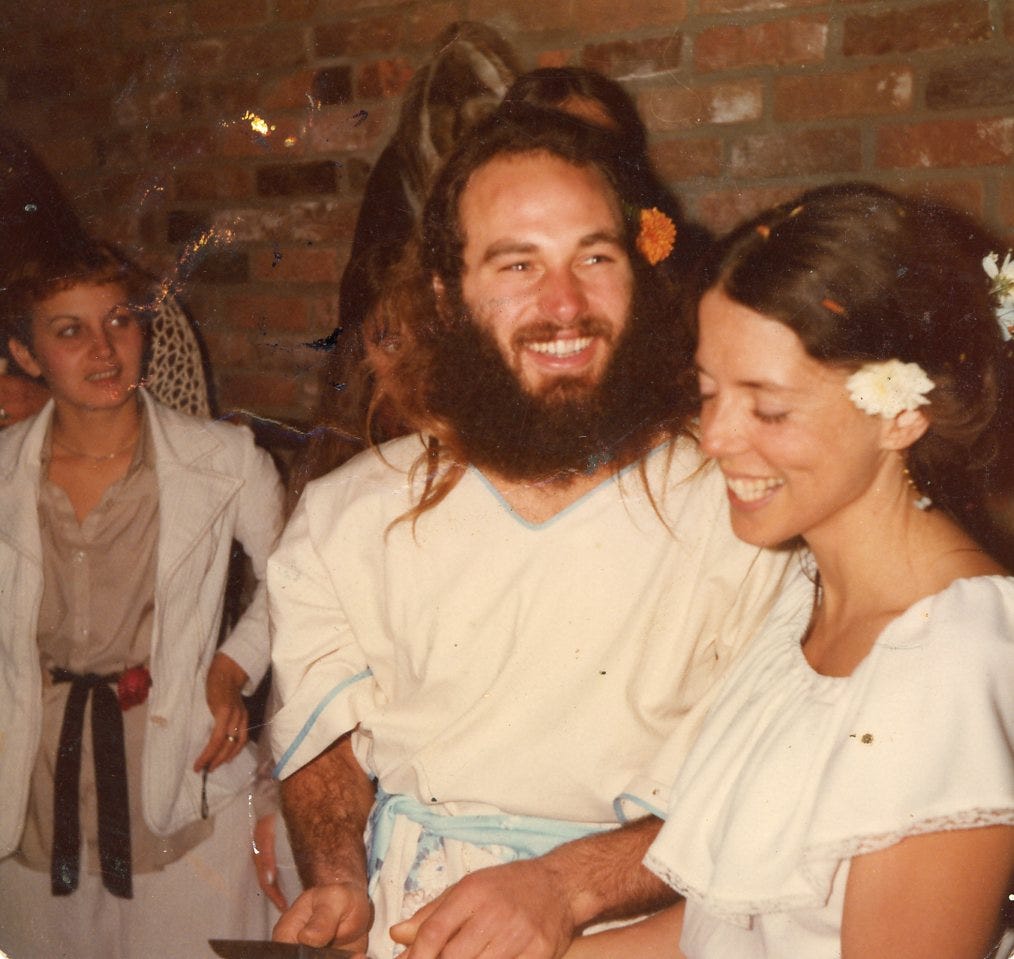
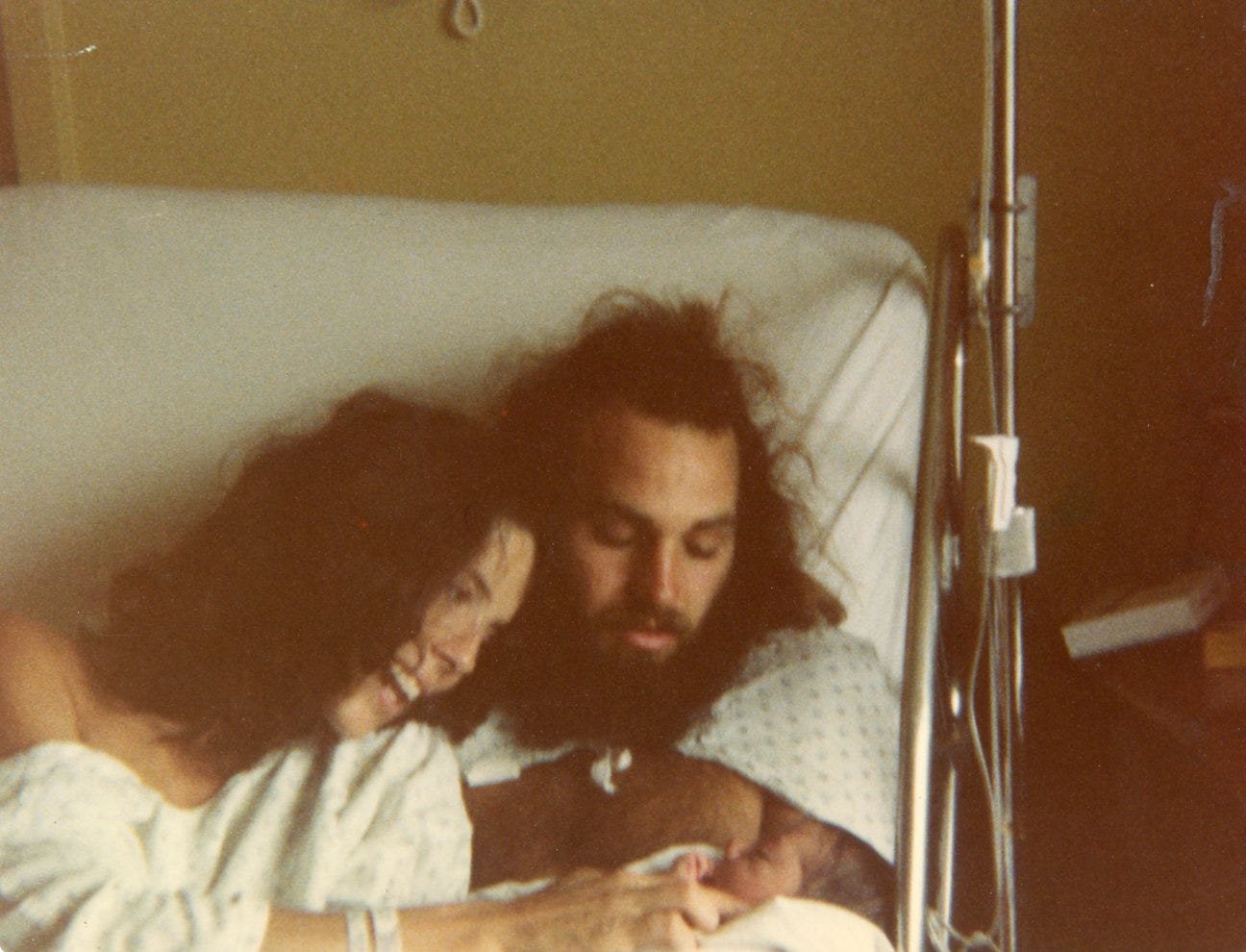
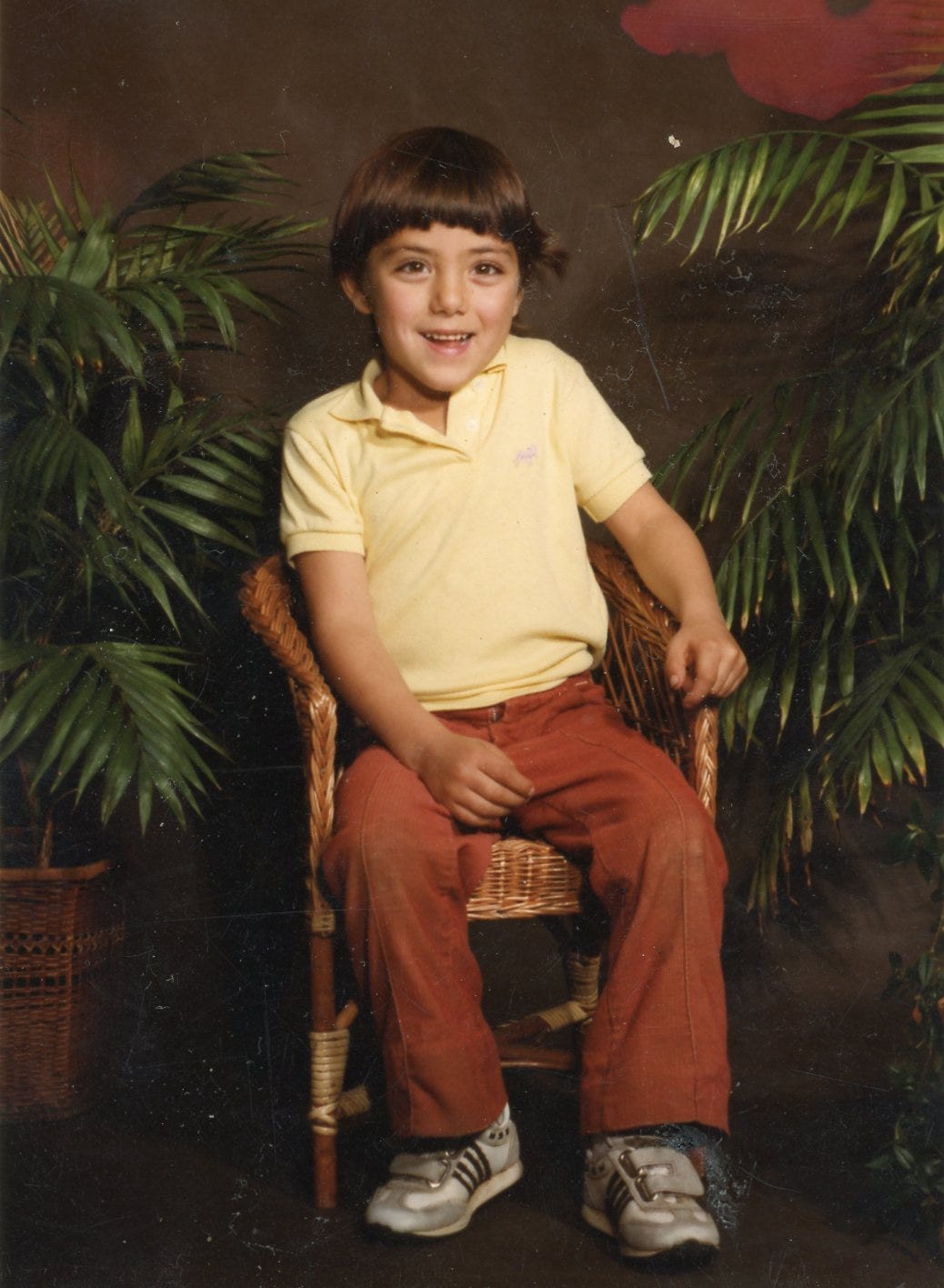
Fast enough that they initially tried to pass my older brother off as Ray’s child, even though both my parents are light-skinned and blue-eyed, and my brother inherited the brown eyes, dark skin, and black hair of his Mexican father.
The Most Functional Dysfunctional Family
Sun Ray was as good as his word, though, and cherished Kai as his own. Ray’s darkness would come out, but if anything, Kai saw the least of it of all his children.
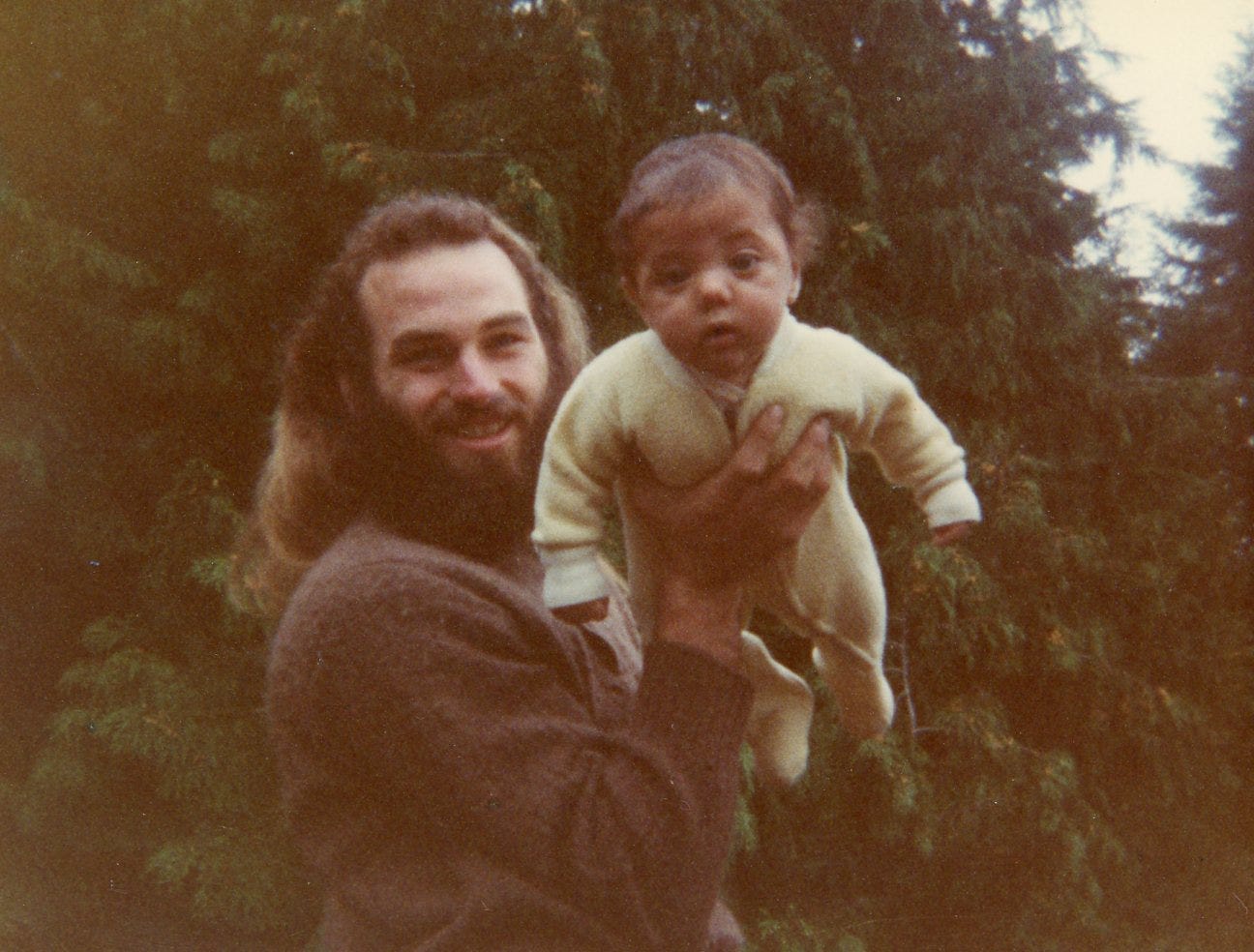
My mom has told me she had ten good years with Ray, and there was real love in their connection. But Ray was too addicted to marijuana and his art and always let those supersede her needs and ours. He wanted her to be a housewife, but at the same time, he was not willing to support her and us in the way she needed.
The more Judy pressed for what she needed, the more Ray pulled away—often falling into depression, injury, or illness.
For years, our family was this strange combination of idyllic and troubled. Most of our life together was beautiful and loving, filled with laughter, joy, and community.
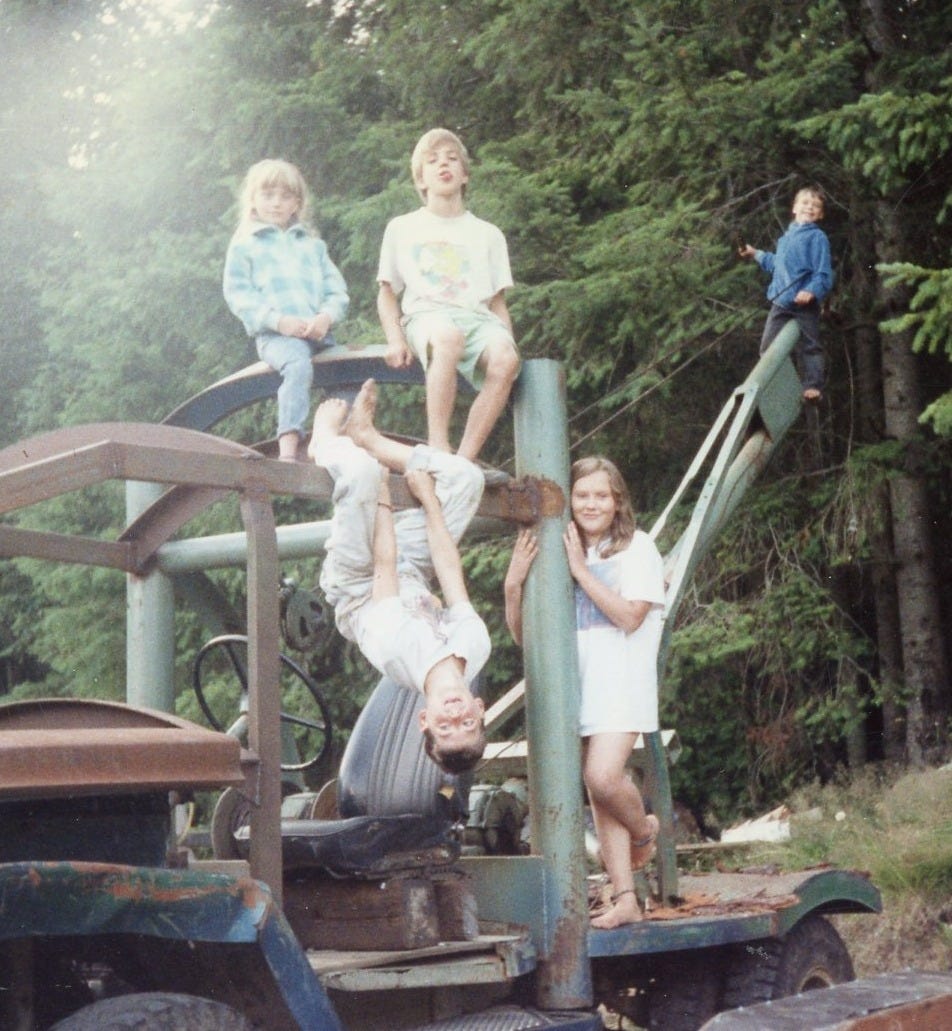
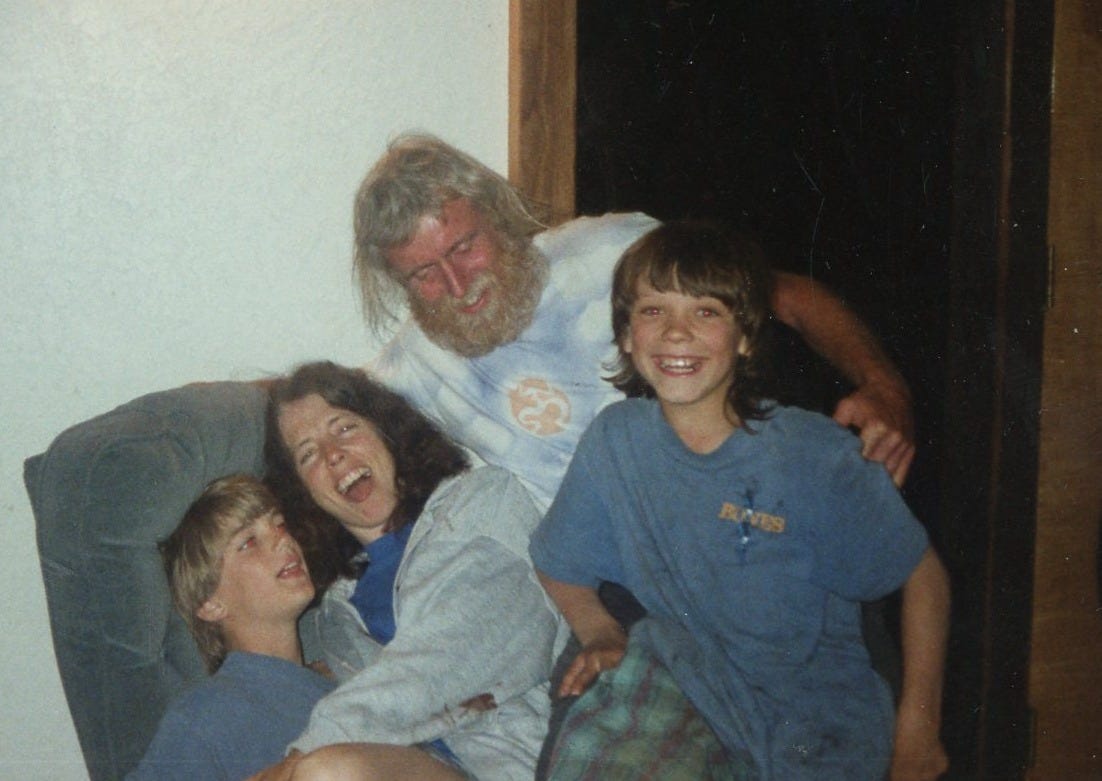
But there were always dark shadows.
Leaving my sister and me alone together was impossible. We fought bitterly and constantly. At the same time, I was struggling with learning disabilities and acting out in school. The fights I was getting into were far to brutal for my age.
My sister could be manipulative and dishonest, and my older brother, at just seven years old, chose to spend the school year in California with his biological father.
So much was beautiful, and yet there were so many signs of dysfunction too.
We often joked in those days that we were the most functional dysfunctional family.
Most of the functionality was coming from Judy and from her network of female friends and relatives—and to her credit, she was never satisfied with dysfunctional.
Of Motherly Love and the Desire for Growth
What I always treasured about my mother was her lovingness. She was always ready with kind words, a warm smile, a big embrace, or a hot meal—for her own children and for the strays who showed up at her door. Which was quite common.
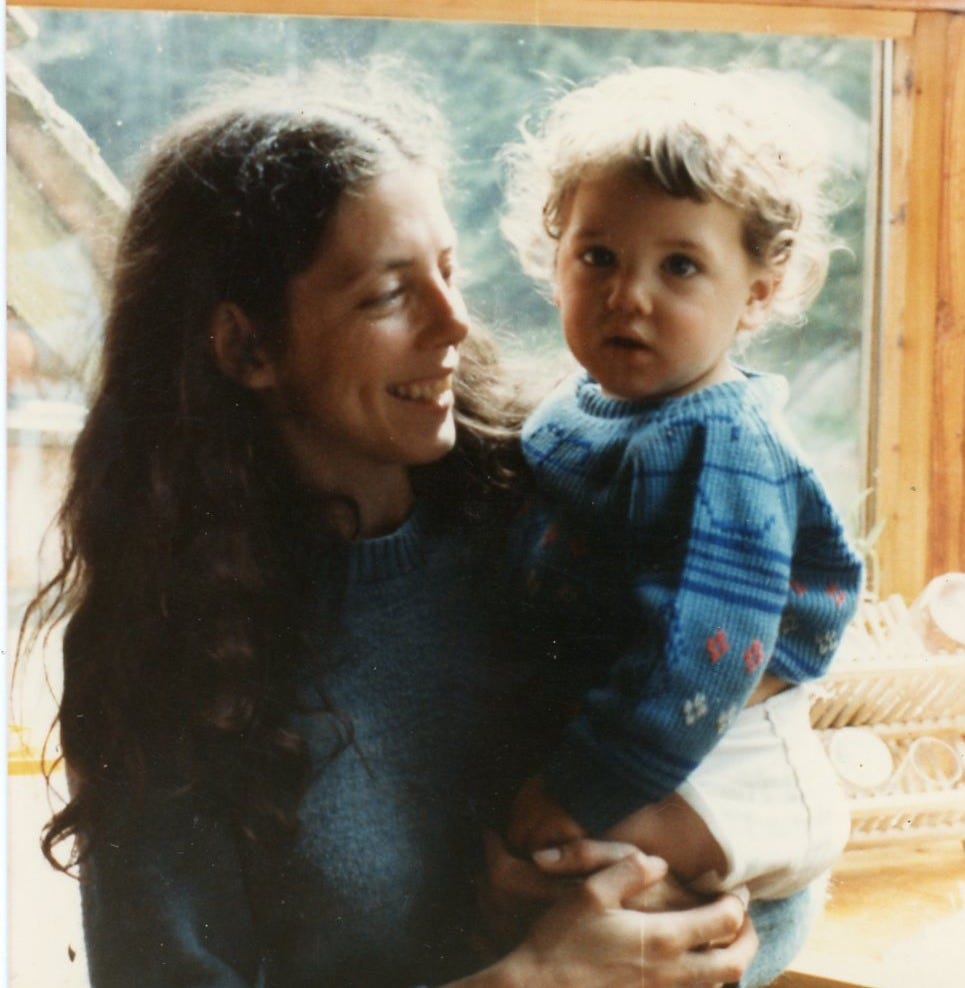
The land we grew up on is now called the Sun Ray Shire in my dad’s honor, but Judy was its beating heart for 20 years.
Despite terrible things happening behind the scenes—despite obvious signs of conflict and stress—Judy bound our family and community together. She kept a beautiful house filled with wonderful food and flowering plants. She maintained a fruitful garden, kept us clothed, and made sure we had enough toys.
We had an amazing freedom to play and roam around the land, and we knew she was there to support us when we needed it.
She knew, too, that everything was not okay, and she worked actively to try to heal her family throughout our childhood.
She first took me to counseling when I started having serious anger issues at just six years old.
She would read every book she could on sibling rivalry, personal growth, and relationships. She got into the Enneagram and the Landmark Forum, did co-counseling with friends, and worked with therapists for herself and her marriage.
She moved me between schools to find programs that could work with my learning disabilities, and she was always working with us on communicating better and more kindly.
I clearly remember, in my early teens, her working with us on how to use "I language" during our fights.
As children, we received most of this as quirky and irritating. Just let us speak how we speak. Stop trying to fix everything, we often thought.
But as I’ve grown into an adult, so much of what my mom taught me has turned out to be profoundly useful.
Judy always modeled curiosity and introspection, and a desire to live a better and more loving life.
What I love best about my father is even though he committed among the worst sins one can against his own daughter, he also chose to do everything he could to redeem himself.
I used the power of his example to help scaffold me in my own darkest moment as a husband and father. I wonder, though, if without the foundation my mother built, Sun Ray would have had the strength he did to show up for Kumara.
It was Judy who introduced Sun Ray to Kripalu, where he would have the conversation that prepared him to answer Kumara when she needed him.
To Turn Back the Tide
In the Christian tradition, it is held that every human is born into sin. In our modern ontology, we might say trauma instead.
But I think they point to a common underlying reality. We are, all of us, products of pain, suffering, and profound moral error in the past.
Every one of us has ancestors who were unfaithful, who were child molesters, who were rapists, slavers, and murderers.
And yet the Christian story tells us we are each also images of the divine, with the free will to walk toward righteousness.
We can be redeemed from sin—or, to put it in modern parlance, we can overcome trauma.
We are not condemned to act out the same old errors generation after generation.
There are always those who face the brokenness of their own homes and families—or who experience the terrible malevolence of the world in general—and yet choose to love and build back up.
Why is it that some of us escape the sins of our fathers and turn back the tide of generational trauma?
How is it that so many who were themselves wounded deeply by those who should have loved them can still choose to love?
I do not know. But I can say: my mother was such a one.
She was an inheritor of deep pain and trauma. The sins of her fathers were dark.
And yet—she chose love.
She chose growth.
She chose redemption.
And she offered that to her children.
My mother’s love and her life’s example made my healing possible. I will carry that example forward now—not just in gratitude, but in action.
In honor of Judy, and all the mothers who turn back the tide in every generation.
If this story resonates with you, I’d love to hear about the mothers, grandmothers, or women in your life who helped turn back the tide. Feel free to share in the comments—or pass this along to someone who might need it.
Thanks for sharing her with us Ray. Beautiful and powerful.
Such a beautiful story! 😍 Your mom is a very brave woman.